
For current SPINS service availability, prices and staffed hours, contact your location.

Table of Contents
- How to Wash Delicate Work Clothes: Step-by-Step
- Sorting Delicate Work Clothes From Regular Laundry
- How to Hand Wash Delicate Clothes Safely
- Delicate vs. Hand Wash Cycle: Which Setting to Use
- Choosing the Best Detergent for Delicate Clothes
- How to Dry Delicate Clothes Without Shrinking Them
- Common Mistakes That Damage Delicate Work Clothes
- When to Take Delicate Work Clothes to a Professional
- Frequently Asked Questions
Last Updated: October 14, 2026
How to Wash Delicate Work Clothes: Step-by-Step
Learning how to wash delicate work clothes starts with one habit: read the care label before the garment ever touches water.
This guide walks through the exact steps, from sorting to drying, so your work clothes stay sharp without a trip to the dry cleaner every week.
Here's what most laundry guides get wrong: they treat "delicate" as one category. It isn't. A silk blouse, a wool suit jacket, and a stretch-knit pencil skirt each need slightly different handling.
What Counts as Delicate Work Clothing
Delicate work clothing is any garment made from fine fibers or structured construction that breaks down under heat, friction, or harsh chemicals. Common examples include:
- Silk blouses, ties, and scarves
- Wool and cashmere sweaters, blazers, and trousers
- Rayon, viscose, and modal tops
- Lined jackets and skirts
- Anything with lace, beading, or embroidery
- Stretch fabrics with spandex or elastane blends
The Federal Trade Commission's guidance on care labeling requires most garments to carry care instructions, so the label is your first and best source. If a garment feels lightweight, drapes easily, or has visible structure like padding or lining, treat it as delicate until the label says otherwise.
Reading Care Labels Before You Wash
Care labels use a standard set of symbols and short phrases. Here's how to read the ones that matter most:
| Label Wording | What It Means | What To Do |
|---|---|---|
| Machine wash cold, gentle | Safe in a machine on low heat | Use delicate cycle, cold water |
| Hand wash only | Too fragile for machine agitation | Wash by hand in a sink |
| Dry clean only | Fabric may shrink or bleed in water | Take to a professional |
| Tumble dry low | Low heat drying is safe | Use lowest heat setting |
| Lay flat to dry | Hanging causes stretching | Dry flat on a towel |
| Do not bleach | Bleach damages the fiber | Skip bleach entirely |
If a label says "dry clean only," don't assume you can hand wash it anyway. Some fabrics, like certain wools and silks, will shrink or warp permanently. When in doubt, follow the label.
Sorting Delicate Work Clothes From Regular Laundry
Delicates should never share a wash load with towels, jeans, or anything with zippers and hooks. Those items are heavier and rougher, and they'll pull and snag fine fabrics during the spin cycle.
Sort your delicate items into these groups:
- By color: whites, lights, and darks kept separate to prevent dye transfer
- By fabric weight: silks and blouses apart from heavier wool sweaters
- By soil level: lightly worn office clothes separate from anything with visible stains
A common mistake is tossing one silk blouse in with a full load of cotton shirts "because it's just one item." That one item absorbs all the agitation from the heavier fabrics around it. Wash delicates together, or wash them alone.
Turn every delicate garment inside out before washing. This protects the outer surface from friction and keeps deodorant marks and sweat stains facing the water where they can actually lift out.
How to Hand Wash Delicate Clothes Safely
Fill a clean sink or basin with cool or lukewarm water and add a small amount of gentle detergent. Submerge the garment, then press it gently with your hands for two to three minutes.
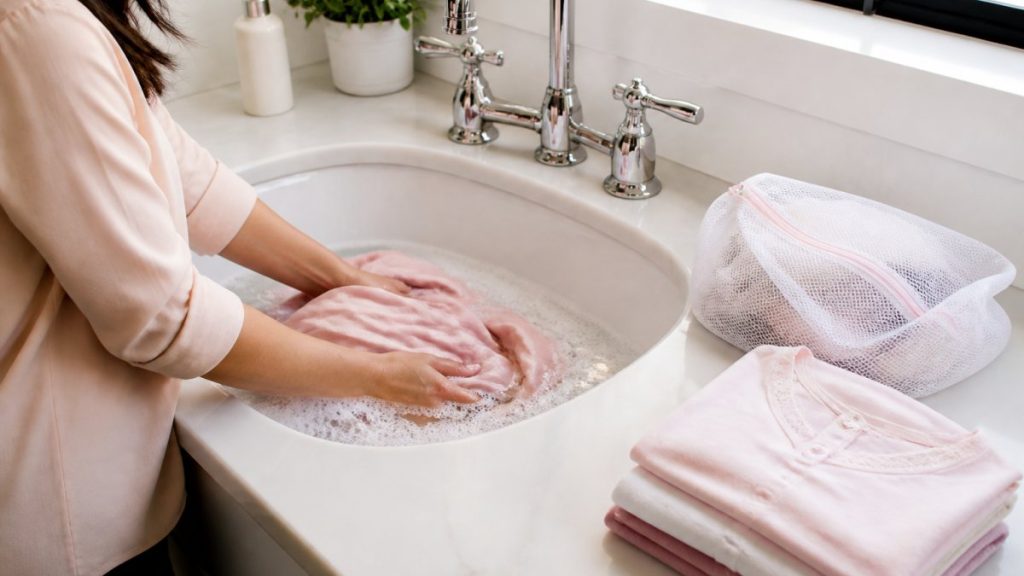
Here's the full process:
- Fill the basin with cool water, no hotter than lukewarm
- Add gentle detergent and swish it through the water
- Submerge the garment and press it down gently, don't rub
- Soak for 3-5 minutes for lightly worn items, longer for stains
- Rinse with cool water until no suds remain
- Press out water between your palms, never wring
- Roll in a towel to absorb excess moisture before drying
For items with stains, treat the spot before washing. Sweat and deodorant marks respond well to a dab of gentle liquid detergent worked in with your fingertips, then left to sit for a few minutes.
Delicate vs. Hand Wash Cycle: Which Setting to Use
The delicate cycle and the hand-wash cycle are not the same thing, and picking the wrong one can damage your clothes. Here's the difference:
- Delicate cycle: slower agitation and a gentler spin, but still uses the drum's full motion
- Hand-wash cycle: the slowest agitation and lowest spin a machine offers, designed to mimic gentle hand movement
If your machine has both, use the hand-wash cycle for silk, wool, and anything labeled "hand wash." Use the delicate cycle for sturdier items like rayon tops or lined skirts.
Always select cold water and the lowest spin setting available. High spin speeds are one of the most common causes of stretching and fiber damage in delicate fabrics.
Skipping the mesh laundry bag is the fastest way to snag a delicate garment. Bras, silk camisoles, and anything with straps should always go in a mesh bag before they enter the drum.
Choosing the Best Detergent for Delicate Clothes
The best detergent for delicate clothes is a liquid formula labeled "gentle" or "free and clear," with no bleach, no brighteners, and no harsh enzymes.
What to look for:
- Liquid over powder for better dissolving in cold water
- pH-neutral formulas that won't strip natural fibers
- No bleach or optical brighteners that fade color
- No fabric softener on wool or silk, it coats the fibers and dulls them
If you have sensitive skin, a fragrance-free detergent is your safest bet. At Spins Laundromat, we use eco-friendly detergents across our services, and customers with specific detergent requests can let our team know when they drop off their items.
How to Dry Delicate Clothes Without Shrinking Them
Drying is where most delicate work clothes are actually ruined, not in the wash. Heat, gravity, and tumbling each attack fiber differently, and the right method depends on what the garment is made of. Match the drying method to the fabric, not to convenience.
Fabric-by-Fabric Drying Guide
| Fabric | Best Method | Why | Avoid |
|---|---|---|---|
| Silk | Roll in towel, hang on padded hanger in shade | Wet silk loses strength; direct sun fades dye | Dryer, wringing, wire hangers |
| Wool / cashmere | Lay flat on a mesh rack, reshape at seams | Gravity stretches wet wool permanently | Hanging, tumble drying, radiators |
| Rayon / viscose | Lay flat or hang briefly, then flat | Weak when wet; stretches under its own weight | Dryer heat, clothespins on shoulders |
| Lace | Lay flat on a towel, pat into shape | Openwork distorts easily | Hanging, agitation |
| Spandex blends | Lay flat or tumble low, remove damp | Heat degrades elastane over time | High heat, overdrying |
| Lined garments | Hang to dry, then press lining separately | Shell and lining dry at different rates | Dryer (lining shrinks faster than shell) |
The Towel-Roll Method, Step by Step
This is the safest way to remove water from any delicate garment without stretching it:
- Lay a clean, dry bath towel flat on a counter.
- Place the garment on top, spread flat and unrumpled.
- Roll the towel and garment together, jelly-roll style, from one end.
- Press down firmly along the roll with your palms.
- Unroll and lift the garment out, it should feel damp, not dripping.
- Reshape at the shoulders, seams, and hem before laying flat or hanging.
Never twist, wring, or hang a soaking-wet delicate garment. The weight of the water alone is enough to stretch a silk blouse or a wool sweater out of shape.
Reshaping and Wrinkle Reduction for Workwear
Work clothes need to look pressed, not just clean. After drying:
- Reshape while damp. Sweaters and knits should be patted back to their original dimensions at the shoulders, cuffs, and hem before they finish drying.
- Steam instead of iron. A handheld steamer relaxes wrinkles in silk, wool, and rayon without the scorch risk of direct heat. Hold the steamer two to three inches from the fabric and let the steam do the work.
- Iron on the lowest setting only if the label allows it. Use a pressing cloth between the iron and the garment, and never rest the iron on the fabric.
- Hang structured pieces immediately. Blazers and lined skirts should go onto wide, padded hangers the moment they're dry to hold their shape.
Storing Delicates So They Stay Office-Ready
How you store a garment determines how it looks on the next wear:
- Fold knits; don't hang them. Hanging stretches shoulders and lengthens the body over time.
- Hang blouses and blazers on padded or contoured hangers to protect shoulder seams.
- Use breathable cotton garment bags for wool and silk, plastic traps moisture and encourages mildew.
- Cedar blocks or lavender sachets deter moths without chemical treatments that can damage fine fibers.
- Give garments 24 hours to air between wears before returning them to the closet, especially after a full workday.
Drying isn't the last step, it's the step that decides whether your work clothes look sharp on Monday. Match the method to the fiber, reshape while damp, steam rather than iron, and store on the right hanger. That combination is what separates a garment that lasts two seasons from one that lasts ten.
Common Mistakes That Damage Delicate Work Clothes
Most damage to work clothes comes from a short list of avoidable mistakes. Here are the ones we see most often:
- Using hot water because it "cleans better," which shrinks wool and fades silk
- Overloading the machine, which increases friction between garments
- Skipping the mesh bag for items with straps, hooks, or beading
- Pouring detergent directly on fabric, which can leave spots and weaken fibers
- Wringing wet garments by hand, which stretches them out of shape
- Leaving items in the washer after the cycle ends, which causes mildew and set-in wrinkles
- Ignoring the care label because the garment "looks sturdy"
Each of these is easy to fix once you know to look for it. The payoff is work clothes that last through more wears and more washes.
When to Take Delicate Work Clothes to a Professional
Some garments are worth handing off. Take delicate work clothes to a professional when the label says "dry clean only," when the fabric is heavily structured like a lined suit, or when a stain has set in and home treatment hasn't worked.
Signs it's time for professional care:
- The care label says dry clean only
- The garment has beading, sequins, or delicate embroidery
- A stain has been through a wash cycle and didn't lift
- The fabric is vintage, tailored, or hard to replace
- You don't have time to hand wash and air dry properly
For busy professionals, drop-off wash and fold or pickup and delivery can handle the routine delicate items while a dry cleaner handles the structured pieces.
Frequently Asked Questions
Can I wash my delicate work clothes with my regular laundry?
It is better to keep them separate. Delicate fabrics like silk, wool, and rayon can snag on zippers, buttons, and rough denim. Sort delicate work clothes into their own load, turn them inside out, and place smaller items in a mesh laundry bag. If you must combine, choose only other lightweight, smooth fabrics and use a gentle cycle with cold water to reduce friction and fabric damage.
Can I use the delicate cycle if a garment says hand wash?
Sometimes, but it depends on the fabric and machine. A delicate cycle uses gentle agitation and low spin, which works for sturdy delicates like polyester blends. For silk, lace, or garments labeled dry clean only, hand washing in cool water with a gentle detergent is safer. Always check the care label first, and when in doubt, hand wash to avoid shrinkage or stretching.
Should I use cold water to wash delicate work clothes?
Cold or cool water is the safest choice for most delicate fabrics. Hot water can cause shrinkage, fading, and fiber damage, especially in wool and silk. Lukewarm water works for lightly soiled items that need a bit more cleaning power. Whatever temperature you choose, keep it consistent through the wash and rinse to avoid shocking the fibers.
How do I dry delicate work clothes without shrinking them?
Skip the tumble dryer for most delicates. Lay knits flat on a towel to dry, hang lightweight fabrics on a padded hanger, and reshape wool items while damp. If you must use a dryer, choose the lowest heat setting and remove items while slightly damp. Air drying in a shaded spot prevents fading and keeps work clothes presentable for the office.
Washing delicate work clothes by hand takes time you may not have, and one rushed cycle can ruin a garment you wear every week. Spins Laundromat takes that risk off your plate with eco-friendly detergents, state-of-the-art equipment, and flexible pickup and delivery that fits a busy schedule. Schedule a pickup with Spins Laundromat and get your work clothes back clean, fresh, and ready to wear.