For current SPINS service availability, prices and staffed hours, contact your location.
Table of Contents
- Time vs. Cleanliness: What Really Saves Laundry Time
- Time-Saving Laundry Tips That Don't Compromise Results
- The Best Laundry Cycle for Clothes That Stay Fresh
- How to Keep Clothes Fresh Beyond the Wash
- Wash and Fold Laundry Service vs. Doing It Yourself
- Choosing a Routine by Household and Schedule
- Cost, Energy, and Environmental Trade-offs
- Frequently Asked Questions
Last Updated: October 21, 2026
Time vs. Cleanliness: What Really Saves Laundry Time
The honest answer is that speed and cleanliness pull against each other, but only at the extremes. A rushed cold-water cycle on an overloaded drum gets clothes damp, not clean, and you end up rewashing them. The real way to save laundry time is to cut the handling around the wash, not the wash itself.
Below, we break down where time actually goes, which shortcuts are safe, and how a wash and fold laundry service compares with doing it all yourself.
Time-Saving Laundry Tips That Don't Compromise Results
Most laundry time is not wash time. It is sorting, pre-treating, moving loads, folding, and putting things away. The American Cleaning Institute's laundry guidance makes a similar point: fabric care starts with reading the care label, which prevents the most expensive time sink of all, replacing ruined clothes.
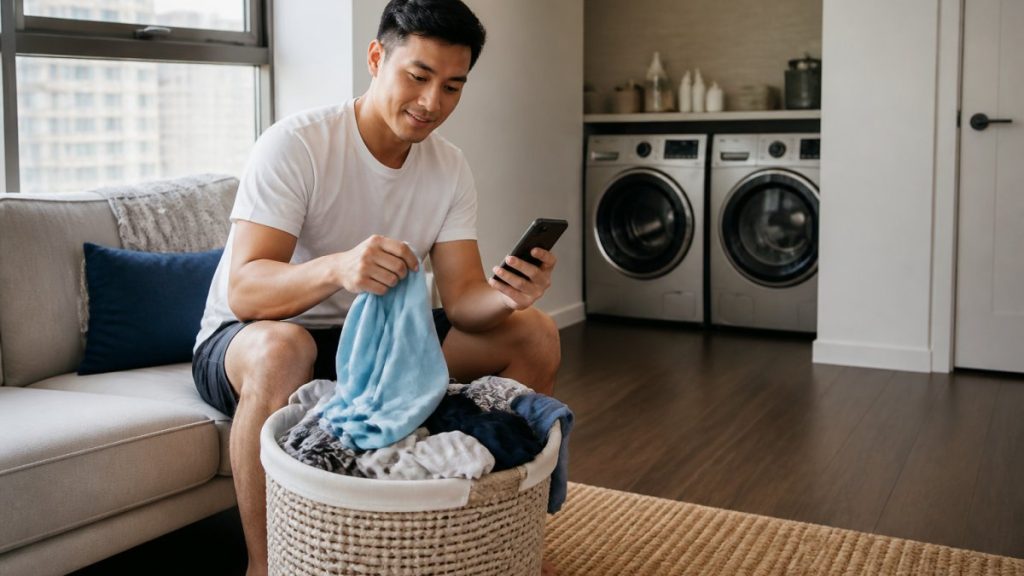
The useful distinction is between machine time and hands-on time. A washer cycle runs 30 to 60 minutes whether you are standing there or not; that is elapsed time, not effort. The minutes you actually spend are the ones that decide whether laundry eats your evening. Here is a realistic breakdown for a typical household load:
| Task | Hands-on time | Machine or elapsed time | What it protects |
|---|---|---|---|
| Sorting | 5-15 min per load | none | Color retention, fabric wear |
| Pre-treating stains | 2-5 min | none (sits until wash) | Stain removal in one pass |
| Loading and starting | 2-3 min | 30-60 min cycle | Correct load size and cycle |
| Moving to dryer | 2-3 min | 40-60 min dry | Odor prevention (no damp sitting) |
| Folding and putting away | 15-30 min | none | Wrinkle and pileup control |
| Total hands-on | roughly 30-55 min per load | 70-120 min elapsed |
That gap is the whole argument. The machine does the cleaning; you do the handling. Time-saving shortcuts that skip handling (not sorting, leaving clothes damp, skipping pre-treatment) are the ones that cost you a rewash, which adds a full second cycle of both hands-on and machine time. Shortcuts that compress handling without skipping it are the safe ones.
Sort Smarter, Not Longer
Set up three bins where clothes come off, not where the washer sits: lights, darks, and delicates. Sorting at the source eliminates the pile on the floor and the second sort before washing. It also protects color retention, because dark denim never sits against a white shirt for a week. The time saving here is real but modest, a few minutes per load; the bigger win is avoiding the one pink-sock load that ruins a week of whites.
Pre-Treat Stains Before They Set
A stain treated within an hour lifts in one wash. A stain left until the weekend can take two or three attempts. Keep a stain treatment stick near the hamper and hit the mark before the garment goes in. That single habit removes more repeat washing than any detergent upgrade, and repeat washing is where the time actually disappears: one avoided rewash is worth more minutes than any folding trick.
Match the Load to the Drum
A loosely filled drum with a hand's width of space at the top cleans and rinses properly. An overloaded drum leaves clothes damp and dingy and often needs a second cycle; an almost-empty drum wastes a full cycle's water and energy for a few garments. Combining two small loads into one full load is one of the few shortcuts that saves time and improves results at the same time.
Check pockets and turn garments inside out as you undress, not at the washer. It takes seconds at the source and prevents the ink-pen disaster that costs a whole load.
Where the Shortcuts Turn Against You
The tips above save handling time without touching cleaning chemistry. The shortcuts that backfire are the ones that trade cleanliness for speed: washing everything on a short cold cycle regardless of soil level, skipping pre-treatment, and leaving finished loads in the drum. Each of those buys a few minutes now and charges you a full rewash later, which is the opposite of saving time. The rule of thumb: compress the handling, never the cleaning. Maintaining this standard of care requires a consistent rhythm that often necessitates delegating household maintenance to professional house cleaning services to ensure the home remains orderly while you focus on essential laundry cycles.
The Best Laundry Cycle for Clothes That Stay Fresh
The best laundry cycle for clothes is a normal warm wash for everyday cottons and a short cold cycle for lightly worn items. Cold water protects fabric and color, and modern detergents are formulated to work well in it. Reserve hot water for towels, bedding, and anything that has been worn during illness.
Match load size to the drum. A washer packed tight cannot rinse properly, and an almost-empty drum wastes a full cycle. Aim for loosely filled, with a hand's width of space at the top.
Delicate fabrics and sensitive materials belong in a mesh bag on a gentle cycle. If a care label says hand wash, a short delicate cycle with cold water is usually a reasonable substitute, but check the label first.
How to Keep Clothes Fresh Beyond the Wash
Freshness is not only a wash problem. Clothes that smell stale after one wear often sat damp in the drum, or were folded slightly humid. Pull items out promptly, shake them, and hang or fold right away. Air garments between wears rather than tossing them straight into the hamper, and wash workout gear separately so odor does not transfer.
Leaving a finished load in the washer for hours creates a musty smell that survives the next wash. Set a phone timer for the cycle end, not the cycle start.
Wash and Fold Laundry Service vs. Doing It Yourself
A wash and fold laundry service wins on hands-on time, not on cost per load. Doing it yourself means sorting, washing, drying, folding, and putting away, which is where the real hours go. A drop-off or pickup service removes nearly all of that handling and returns clean, folded clothes.
The trade-off is control. If you have sensitive skin or specific detergent needs, ask the service directly about their process before you commit.
For busy schedules, the practical comparison looks like this:
- Self-service: lowest cost, highest hands-on time, full control over detergent and temperature
- Drop-off wash and fold: moderate cost, minimal hands-on time, folded and ready to put away
- Pickup and delivery: highest convenience, zero travel, best for tight weeks
Choosing a Routine by Household and Schedule
No single routine fits every schedule, and the right choice depends less on how much laundry you have than on when you are awake, whether you have machines at home, and how much hands-on time you can spare in a week. The comparison below is the one most competitors skip: matching the routine to the schedule instead of prescribing one approach for everyone.
| Household or schedule | Main constraint | Routine that fits | Why |
|---|---|---|---|
| Commuter or long-hours professional | Little weekday hands-on time | Pickup and delivery or drop-off wash and fold, weekly | Removes sorting, folding, and travel; clothes return ready to put away |
| Parents with young children | Volume plus stains | Weekly wash and fold order plus same-day stain treatment at the hamper | Volume handled in one batch; prompt pre-treatment prevents rewash |
| Shift workers | Odd hours, unpredictable energy | Self-service at an off-peak time, or drop-off on the way to a shift | Avoids competing for machines at peak hours and removes folding from tired hours |
| Students and renters without in-unit machines | No machine, limited storage | Self-service for regular loads, occasional drop-off for bulky items | Lowest cost per load; drop-off reserved for bedding and towels |
| Households with limited laundry access | Travel and machine time | Batch one full load per week and use drop-off for overflow | Fewer trips; full loads make each trip count |
| Small businesses with linen volume | Consistent turnaround | A service built for high-capacity, scheduled pickup | Volume and reliability matter more than per-load cost |
The pattern behind the table: the more fragmented your week, the more a service pays off, because services remove the handling that fragments your time. The more predictable your week, the more self-service pays off, because you can run full loads on your own schedule and keep control of detergent and temperature.
A practical way to decide is to count your hands-on minutes for one week of your current routine, then compare that number with the hours you would get back from a service. If folding and putting away alone run 15 to 30 minutes per load, a household doing four loads a week is spending one to two hours on handling alone.
If you are weighing the cost against the hours, ENERGY STAR's guidance on washer efficiency is worth reading, because efficient machines and full loads cut both utility use and cycle count, which changes the math for households that do have machines at home.
Match the routine to your schedule, not to a generic ideal. The best laundry routine is the one you will actually keep up with on your busiest week.
Cost, Energy, and Environmental Trade-offs
Running full loads in cold water is the cheapest and greenest approach at home. Small, frequent loads waste water, energy, and detergent. A professional service runs full machines, which is more efficient per garment than a half-empty home washer, and commercial equipment typically wrings out more water so drying takes less energy.
Cost depends on volume, turnaround, and whether you choose drop-off or delivery. Check the Spins Laundromat pricing page for current rates rather than guessing, and compare that figure against your own utility and detergent spend plus the hours you get back.
The cheapest option per load is rarely the cheapest option per hour. Count your time at what it is worth to you before deciding.
Frequently Asked Questions
How can I save time on laundry when I have a busy schedule?
Start by reducing how often you wash. Wear everyday clothes two to three times before washing, spot-clean instead of re-washing, and run full loads rather than several small ones. A short wash cycle with cold water cuts wash duration, and pre-treating stains promptly prevents repeat washing. If your schedule leaves little room, a wash and fold laundry service removes sorting, washing, drying, and folding from your week entirely. The key is matching the method to the time you actually have.
Does a laundry service save more time than doing laundry at home?
A laundry service typically saves significant hands-on time, including sorting, loading, switching loads, drying, and folding. Doing laundry at home still requires hands-on time even with a large-capacity washer. For households with tight schedules, the time saved can exceed the service cost. The trade-off is control over detergent and fabric care, so confirm those details before signing up.
How do you keep clothes clean and fresh between washes?
Air clothes after wearing instead of tossing them in a hamper, and hang them where air circulates. Use a fabric refresher sparingly, and address small stains immediately with a damp cloth. Rotate garments so each gets rest between wears. Store clean items in a dry, ventilated space, and avoid overloading drawers, which traps odor. These habits reduce unnecessary washing and extend garment longevity, which also saves laundry time over the long run.
Which laundry cycle should you use for cleaner clothes?
For most everyday loads, a normal cycle with cold water handles dirt and odor well while protecting fabric and color. Use a short wash cycle for lightly soiled items to save time and energy. Reserve heavy-duty or hot-water cycles for towels, linens, or heavily soiled workwear. Always check care labels first, especially for delicate fabrics and sensitive materials. Matching the cycle to the load prevents repeat washing and fabric damage.
Is wash-and-fold laundry worth it for busy households?
It depends on how you value your time. Wash-and-fold removes sorting, washing, drying, and folding, which is where most hands-on time goes. For professionals, students, seniors, or business owners juggling multiple responsibilities, the hours returned each month often justify the cost. Households with flexible schedules and large washers may prefer doing it themselves. Compare the service's per-pound rate with your available time before deciding.
Laundry will always take some time, but it does not have to take your weekend. If your schedule is already full, Spins Laundromat offers drop-off wash and fold, pickup and delivery, flexible hours, and eco-friendly detergents that protect your clothes and your skin. Schedule a pickup with Spins Laundromat and get your clean, fresh clothes back without giving up an evening.