For current SPINS service availability, prices and staffed hours, contact your location.

Last Updated: November 22, 2026
Quick Summary
Wash and fold service covers the full laundry cycle: your bag is weighed and sorted by color, fabric, and temperature, then washed, dried, and neatly folded before being packed back into your laundry bag. Everyday clothing and household linens are included, while dry-clean-only garments, leather, and heavily embellished pieces usually are not.
- The standard process runs four steps: weighing and intake, sorting and load separation, washing and drying, then folding and packaging.
- Per-pound pricing multiplies your laundry's weight by a set rate, and many providers set a minimum weight charge.
- A 6-pound bag may be billed at a 10- or 12-pound minimum, so ask about minimums and rounding rules.
- Empty every pocket and pre-treat visible stains before drop-off to protect your clothes and speed up sorting.
- Write detergent, temperature, and separate-load requests on the intake form, because mixed loads typically run on standard settings.
Table of Contents
- What Wash and Fold Service Covers
- What Items Are Included and What Gets Left Out
- Wash and Fold Cost per Pound: How Pricing Works
- How to Prepare Laundry for Wash and Fold
- Wash and Fold Pickup and Delivery Explained
- How Customer Preferences and Special Requests Are Handled
- Schedule Your First Wash and Fold Pickup
- Frequently Asked Questions
What Wash and Fold Service Covers
Wash and fold service is a laundry option where a provider washes, dries, and folds your everyday laundry for you, typically priced by weight and returned clean and ready to put away. You drop off a bag of dirty clothes, and you get back fresh laundry without touching a machine. The service covers the full cycle from sorting through folding, so you skip the hours of waiting. You can read the drop off wash fold page for the full description of what drop-off service includes.
Most people picture a single machine doing everything. In reality, a proper wash and fold workflow separates your items before anything gets wet.
The Standard Four-Step Process
- Weighing and intake. Your bag is weighed, and staff note any special requests or items that need separate handling.
- Sorting and load separation. Clothes are divided by color, fabric type, and wash temperature so a red shirt never bleeds into whites.
- Washing and drying. Commercial-grade machines run each load on the right cycle, then dryers finish the job on settings matched to the fabric.
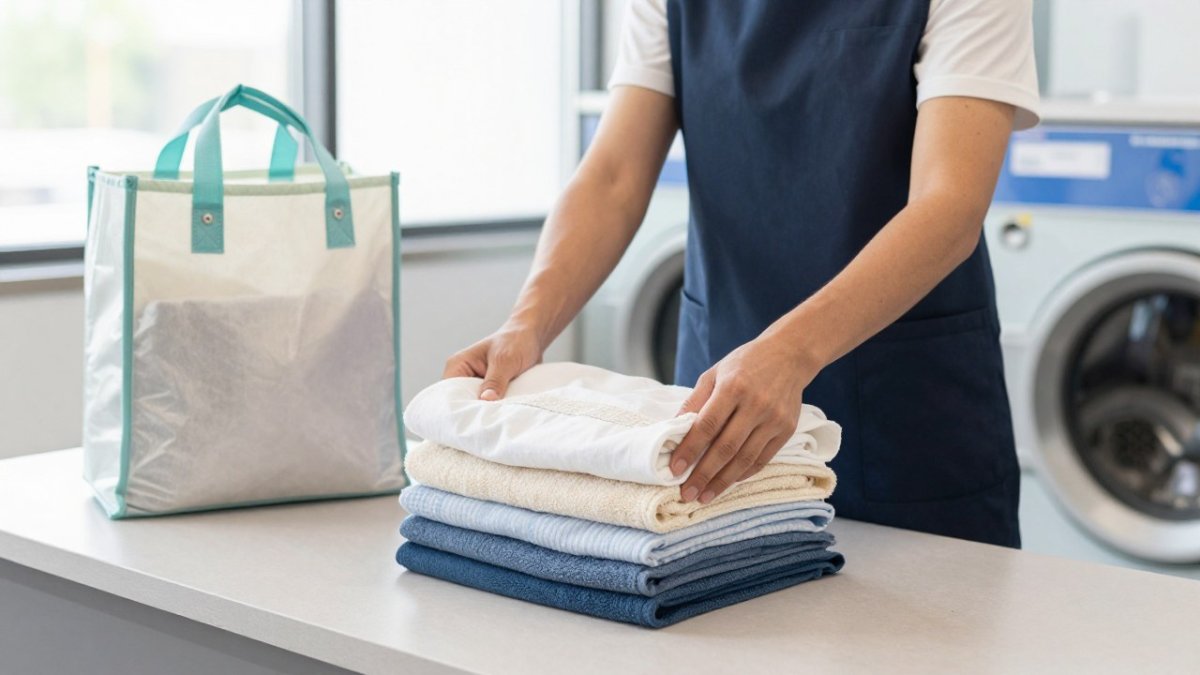
- Folding and packaging. Clean items are neatly folded and packed back into your laundry bag, ready to go home.
The quality of that four-step process depends heavily on what your provider will and won't accept. That's where most customers get surprised.
What Items Are Included and What Gets Left Out
Everyday clothing and household linens are included in standard wash and fold, while dry-clean-only garments, leather, and heavily embellished pieces usually are not. The fastest way to avoid a rejected bag is to check your items against a concrete list before drop-off, because acceptance rules vary meaningfully from one provider to the next.
The everyday items almost always accepted
- T-shirts, polo shirts, blouses, and button-downs made of cotton or cotton blends
- Jeans, chinos, shorts, and casual pants
- Sweatshirts, hoodies, and sweatpants
- Underwear, bras (in a mesh bag if requested), and socks
- Pajamas and loungewear
- Bath towels, hand towels, washcloths, and kitchen towels
- Sheets, pillowcases, and standard washable blankets
- Baby clothes and children's everyday wear
Items accepted by many providers, but confirm first
- Athletic wear and moisture-wicking fabrics, which some providers wash on cooler cycles to protect elasticity
- Bath mats and small washable rugs
- Throw blankets and light comforters that fit commercial machines
- Uniforms and workwear without heavy soiling
- Cloth diapers, which many providers decline for hygiene reasons
- Pet bedding, which is frequently excluded or priced separately
Items usually excluded or priced as specialty
- Dry-clean-only garments, suits, and structured jackets
- Leather, suede, fur, and shearling
- Silk, rayon, and other fabrics labeled hand-wash or dry-clean
- Items with heavy beading, sequins, appliques, or fragile trim
- Wedding dresses and formal gowns
- Pillows, heavy comforters, duvets, and sleeping bags, which often carry per-item pricing rather than per-pound pricing
- Shoes, bags, and accessories
- Items contaminated with bodily fluids, mold, or hazardous chemicals
- Heavily soiled items such as paint-covered workwear, which may be refused to protect other customers' loads
How to confirm acceptance before you bag it
Check the provider's posted item list or ask at intake. A common pattern is that the per-pound rate covers everyday machine-washable laundry, while anything bulky, structured, or delicate moves to a per-item price or is declined.
Watch out: an item that is accepted does not guarantee it will be treated as special care. If a garment needs cold water, a gentle cycle, or no dryer, write that on the intake form and bag it separately, because mixed loads are typically run on standard settings.
Special-care items deserve a direct question before you hand anything over. If a piece is lost or damaged, the provider's policy governs what happens next, so read the terms on your service agreement. Spins Laundromat publishes a clear path for handling lost or damaged items so you know your options before you drop off.
Wash and Fold Cost per Pound: How Pricing Works
Wash and fold cost per pound is the most common pricing model, where your total bill is your laundry's weight multiplied by a set rate. A load that weighs more costs more, which makes per-pound pricing easy to predict once you know your average bag weight. Per-bag pricing works differently: you pay a flat fee regardless of weight, which favors heavier loads.
Here's how the three common models compare:
| Pricing Model | How It Works | Best For | Watch Out For |
|---|---|---|---|
| Per pound | Rate multiplied by weight | Average household loads | Minimum weight charges and rounding rules |
| Per bag | Flat fee per bag | Heavy loads, bedding | Bag size limits and fill restrictions |
| Per item | Fixed price per piece | Specialty items, comforters, pillows | Adds up fast on volume |
The line items that decide your final bill
A headline per-pound rate is only one part of the total. Most providers build the bill from several components, and each one can change what you actually pay:
- Minimum weight charge. Many providers set a floor, so a small bag is billed as if it hit that minimum. A 6-pound bag may be charged at a 10- or 12-pound minimum.
- Weight rounding. Some providers round up to the nearest pound or half-pound; others round to the nearest quarter. Ask which rule applies.
- Base or service fee. A flat fee may be added per order regardless of weight.
- Pickup and delivery fee. Delivery may be included in the per-pound rate, charged per trip, or free above a minimum order value.
- Rush or same-day surcharge. Next-day and same-day turnaround often carries an added fee.
- Specialty item pricing. Comforters, pillows, bath mats, and oversized items are frequently priced per piece rather than by weight.
- Detergent or fragrance upgrades. Hypoallergenic, fragrance-free, or premium detergent options may add a per-load charge.
- Separate-load requests. Asking for a small item to run in its own load can trigger an additional minimum charge.
A worked example of how the total adds up
Suppose a provider charges a per-pound rate with a 10-pound minimum, a flat delivery fee, and a per-item price for comforters. A 7-pound bag of everyday clothes would be billed at the 10-pound minimum, plus the delivery fee. Add one comforter and the comforter is priced separately, not folded into the per-pound weight. The lesson: compare the total bill for a realistic bag, not the headline rate, because a lower per-pound rate with a high minimum and a delivery fee can cost more than a higher rate with everything included.
How to compare providers fairly
- Ask for the minimum weight and the rounding rule before your first order.
- Confirm whether pickup and delivery are included or billed per trip.
- Ask how comforters, pillows, and bath mats are priced.
- Check whether rush service carries a surcharge.
- Confirm whether fragrance-free or hypoallergenic detergent costs extra.
- Request the total for a sample bag weight so you can compare like for like.
Spins Laundromat publishes its pricing details so you can check current rates and fee structure before you commit. Watch out: a low per-pound rate can hide a minimum charge, a delivery fee, or a specialty surcharge, so compare the total bill, not just the headline number.
How to Prepare Laundry for Wash and Fold
Preparing laundry well is the difference between a smooth pickup and a bag of problems. A few minutes of prep protects your clothes and helps the provider sort faster.
- Empty every pocket. Tissues dissolve into lint that coats an entire load.
- Pre-treat visible stains and point them out at drop-off so staff can give them attention.
- Separate anything you want washed on its own, like a new dark garment or a delicate item.
- Bag your laundry in a sturdy hamper or bag that closes securely.
- Note any detergent or temperature preferences on your intake form.
A common mistake is tossing in a garment that needs special care and hoping for the best. Flag it instead. Providers would rather know upfront than discover a shrunken sweater after the dryer.
Wash and Fold Pickup and Delivery Explained
Pickup and delivery turns wash and fold into a doorstep service: you schedule a pickup, a driver collects your bag, and your clean laundry returns folded within the turnaround window. Many providers offer next-day or same-day options, and some include delivery in the base rate while others charge extra. The convenience matters most for busy households, students, and anyone without easy access to a machine.
Spins Laundromat offers pickup and delivery with flexible scheduling, so you can set a window that fits your week. Confirm your service area before your first booking, since delivery zones vary by provider. If you live outside the delivery map, drop-off wash and fold at a nearby location is the fallback.
How Customer Preferences and Special Requests Are Handled
Customer preferences are handled through an intake note or form at drop-off, where you record detergent choice, water temperature, fabric softener, and any items to wash separately. Providers that take preferences seriously will confirm them before washing. If you have sensitive skin or a detergent allergy, say so clearly and ask what the default detergent is.
Spins Laundromat uses eco-friendly detergents and accepts special requests, and our guide on requesting a specific detergent walks through exactly how to make that happen. The thing most customers miss: preferences work best when you write them down rather than mention them in passing. A written note travels with your bag; a verbal comment may not.
Schedule Your First Wash and Fold Pickup
The gap between doing laundry yourself and handing it off comes down to time and consistency. Knowing what's included, what's excluded, how pricing works, and how to prepare your bag removes the guesswork. The first pickup is usually the only one that feels uncertain.
Spins Laundromat offers eco-friendly detergents, flexible hours, pickup and delivery, and drop-off wash and fold if you'd rather stop by. Schedule a pickup and let us take laundry off your list.
Your weekend shouldn't disappear into a laundry room. Spins Laundromat offers drop-off wash and fold, pickup and delivery, and self-service options built around busy schedules. Get started with Spins Laundromat and reclaim your time with fresh, folded laundry delivered to your door.
Frequently Asked Questions
Is wash and fold service worth it?
It depends on how you value your time. Wash and fold saves the hours spent sorting, washing, drying, and folding each week, and the per-pound price usually covers detergent, machine use, and labor. For busy professionals, students, and families, the convenience often outweighs the cost. Compare the per-pound rate against your own detergent, energy, and time costs before deciding.
How much should wash and fold be?
Most providers price by the pound, though some use per-bag or item-based pricing for specialty pieces. Rates vary by location, turnaround time, and whether pickup and delivery are included. Spins Laundromat lists current wash and fold pricing on its website, so check there for exact rates rather than relying on a generic average.
Can I bring my own detergent to wash and fold?
Many wash and fold services use their own detergents as part of the standard process. If you have sensitive skin or a preferred brand, ask ahead of time whether you can supply your own detergent or request a fragrance-free option. Confirm any special handling instructions when you schedule your pickup.
Does wash and fold service include ironing or dry cleaning?
Standard wash and fold covers washing, drying, and folding everyday laundry. Ironing and dry cleaning are usually separate services with their own pricing. If you need pressed shirts or dry-cleaned garments, ask your provider whether they offer those add-ons and how they affect turnaround time. Delicates and special-care items may also need separate handling.
