For current SPINS service availability, prices and staffed hours, contact your location.
Table of Contents
- Start With the Right Eco-Friendly Laundry Detergent
- Switch to Cold Water Laundry for the Biggest Energy Cut
- Laundry Detergent Sheets vs Liquid: A Whole-Life Comparison
- How to Reduce Laundry Water Use Without Sacrificing Clean Clothes
- Wash Less Often, Wash Full Loads, Measure Every Dose
- Air Drying, Microfiber Pollution, and the Habits Most Guides Skip
- Frequently Asked Questions
Last Updated: October 19, 2026
Start With the Right Eco-Friendly Laundry Detergent
The best way to shrink your laundry's environmental footprint starts with what you pour into the machine. Detergent choice sets the baseline for everything else. Pick the wrong formula and you undo the gains from cold water and full loads before the cycle even starts.
Eco-friendly laundry detergent is a cleaning formula built from plant-based ingredients that break down safely after use, with no phosphates or other additives that harm waterways. The label matters more than the marketing.
Ingredients That Matter (and the Ones to Skip)
Look for plant-based surfactants. These are the cleaning agents that lift dirt from fabric, and the plant-derived versions biodegrade far more readily than petroleum-based ones. Skip anything listing phosphates, which feed algae blooms in rivers and lakes, and optical brighteners, which are synthetic dyes that stay on your clothes and wash into wastewater.
A common mistake is assuming "fragrance-free" means eco-friendly. It doesn't. Check the full ingredient list, not just the front of the bottle.
What Certifications Actually Tell You
Third-party certifications do the ingredient homework for you. The EPA Safer Choice program reviews every ingredient in a product for safety and biodegradability before granting its label. That's a stronger signal than any "green" or "natural" claim a brand prints on its own packaging.
Here's the part most guides miss: a certification logo means an independent body checked the formula. A brand's own leaf icon means nothing. When you compare bottles, look for the third-party seal first.
Sniff test for greenwashing: if a detergent claims to be "eco-friendly" but lists no certified ingredients and no third-party seal, treat the claim as marketing until proven otherwise.
Switch to Cold Water Laundry for the Biggest Energy Cut
Cold water is the single highest-impact switch most households can make. Heating water is the most energy-hungry part of a wash cycle, so dropping the temperature cuts energy consumption at the source.
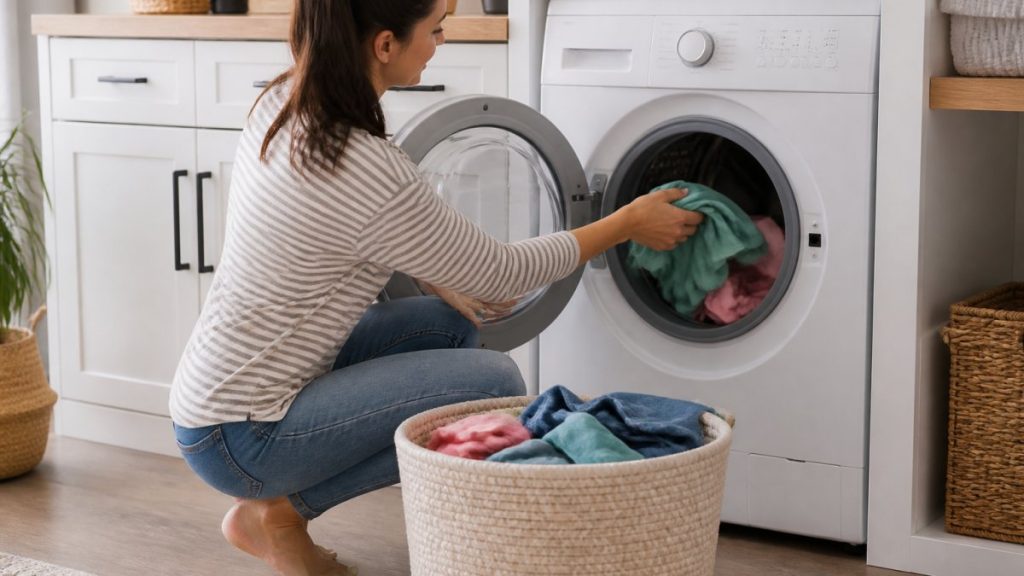
Modern detergents are formulated to work in cold water. You don't need heat to get clothes clean.
The tradeoff is real: cold water struggles with heavy grease and some stains. Pretreat those spots and you'll keep the energy savings without sacrificing results. For most loads, cold water laundry cleans just as well.
Laundry Detergent Sheets vs Liquid: A Whole-Life Comparison
Most guides declare a winner, sheets are greener, or liquid cleans better, without walking through the lifecycle. That framing hides the real tradeoffs. A honest comparison looks at five stages: ingredients, packaging, manufacturing, shipping weight, and use-phase performance. No single format wins every stage.
Stage 1: Ingredients and Biodegradability
Liquid detergents are mostly water. A typical liquid dose is 60-80% water by weight, which means you are shipping and heating water you do not need.
Both formats can be formulated with biodegradable, plant-derived surfactants and without phosphates or optical brighteners. The format itself does not guarantee a clean ingredient list; the label does. Check for third-party review such as the EPA Safer Choice program regardless of format.
Stage 2: Packaging and Plastic
Liquid detergent typically ships in a plastic jug, often high-density polyethylene (HDPE), which is recyclable in most curbside programs but still single-use. A standard 100-ounce jug cleans roughly 32-64 loads depending on dose.
Concentrates sit in between: a smaller bottle, but still a bottle. Powder often comes in a cardboard carton with a plastic scoop, which is a meaningful packaging reduction versus liquid but heavier to ship.
Stage 3: Manufacturing and Water
Because liquid is mostly water, manufacturers pay to purify, heat, and bottle that water. Sheets and powders skip most of that step. The manufacturing footprint per load is generally lower for waterless formats, though the difference depends on the factory's energy source, a sheet made in a coal-powered plant can carry a higher manufacturing footprint than a liquid made with renewable electricity.
Stage 4: Shipping Weight and Transport Emissions
This is where sheets win most clearly. A liquid jug weighs two to four pounds; a sleeve of sheets weighs a few ounces. Because transport emissions scale with weight and volume, moving sheets to a store or a home produces far fewer emissions per load than moving liquid. Concentrates reduce shipping weight versus standard liquid but not as much as sheets. Powder is heavy and bulky, so it loses on this stage.
Stage 5: Use-Phase Performance and Dosing
Liquid gives you flexible dosing and stronger performance on grease and set-in stains. Sheets are pre-measured, which eliminates overdosing, the most common home laundry waste, but a single sheet may under-dose a large or heavily soiled load. Concentrates require careful measuring but deliver strong cleaning per ounce. Powder performs well in hard water and on clay-based soils but can leave residue in cold cycles.
| Lifecycle stage | Sheets | Liquid | Concentrate | Powder |
|---|---|---|---|---|
| Water content | Minimal | High (60-80%) | Low | None |
| Packaging | Paperboard/compostable sleeve | Plastic jug (HDPE) | Smaller plastic bottle | Cardboard carton + scoop |
| Shipping weight per load | Lowest | Highest | Moderate | High |
| Dosing accuracy | Pre-measured | Manual | Manual | Manual |
| Stain performance | Moderate | Strong | Strong | Moderate-strong |
| Best-fit household | Low-waste, light loads, travel | Heavy soil, sensitive skin | Balanced footprint and performance | Hard water, budget |
Match the format to your actual washing pattern, not to a universal ranking. A household that runs mostly light loads in cold water will usually see the biggest lifecycle gain from sheets or concentrate. A household with heavy soiling, kids in sports, or hard water may get better results, and fewer rewashes, from liquid or powder.
The Rewash Penalty
The lifecycle comparison only holds if the product cleans on the first pass. A format that under-performs forces a second wash, which doubles water, energy, and detergent use. That rewash penalty can erase the packaging and shipping gains of a lighter format. The greenest format is the one that gets your clothes clean in one cold cycle at the correct dose.
How to Reduce Laundry Water Use Without Sacrificing Clean Clothes
Water consumption drops fastest when you match load size to the machine's setting and stop running half-empty cycles. Every skipped partial load saves both water and energy.
Start with these habits:
- Run full loads whenever possible
- Select the water level that matches your load, not the maximum
- Skip the extra rinse cycle unless skin sensitivity demands it
- Fix a leaky machine hose before it wastes water silently
Front-loading machines generally use less water than top-loaders. If you're washing at home, the extra-rinse button is the quiet water waster most people never notice.
Wastewater matters too. Detergents that biodegrade cleanly put less strain on local treatment systems.
Wash Less Often, Wash Full Loads, Measure Every Dose
Three habits do more for your environmental footprint than any product swap: wash less often, wash full loads, and measure every dose. Get these right and the rest follows.
Washing less often extends garment lifespan. Jeans and sweaters rarely need a wash after one wear. Air them out between wears and spot-clean as needed.
Measuring detergent correctly prevents overdosing, which is the most common waste in home laundry. More soap doesn't mean cleaner clothes. It means residue, extra rinsing, and wasted product.
- Sort loads so full loads come together
- Check the dose line before pouring
- Air out lightly worn items instead of washing
- Run the machine only when it's full
Air Drying, Microfiber Pollution, and the Habits Most Guides Skip
Air drying is the easiest energy win after cold water. A clothesline or drying rack uses zero energy and adds nothing to your carbon footprint. The dryer is one of the most energy-hungry appliances in the home, a typical electric dryer draws roughly 3-5 kWh per load, so line drying even half your loads makes a measurable dent in household electricity use and emissions.
Microfiber pollution is the habit most guides skip, and it deserves more than a sentence. Here is the mechanism and what actually helps.
How Synthetic Fabrics Shed Microfibers
Synthetic textiles, polyester, nylon, acrylic, elastane blends, are made of plastic fibers. Every wash cycle, mechanical agitation and water flow break tiny fibers off the fabric. Those fibers, generally smaller than 5 millimeters, flow out with the wash water. Wastewater treatment plants capture a large share of them in sludge, but a meaningful fraction passes through to rivers, lakes, and oceans. Natural fibers like cotton and wool also shed, but they biodegrade; synthetic microfibers persist.
Three variables drive how much a garment sheds:
- Fabric construction. Fleece, brushed synthetics, and loosely knit fabrics shed more than tightly woven ones.
- Garment age. New synthetic garments shed more in their first several washes.
- Wash behavior. Longer cycles, higher agitation, and hotter water increase fiber loss.
What Actually Reduces Microfiber Emissions
- Wash synthetics less often. The single biggest lever. Air out between wears and spot-clean. Every skipped wash is a skipped shedding event.
- Use a microfiber-catching bag or aftermarket filter. Washing bags trap fibers inside the bag so they can be disposed of in the trash rather than sent to the drain. Aftermarket washing-machine filters attach to the discharge hose and capture fibers before they reach wastewater. Independent testing has generally found bags and filters reduce, but do not eliminate, fiber release; effectiveness varies by product and load type.
- Run fuller, shorter, cooler cycles for synthetics. Less agitation and less water mean less shedding. Avoid extra rinse cycles on synthetic loads.
- Choose natural fibers when practical. Cotton, linen, wool, and hemp biodegrade and do not contribute persistent plastic microfibers. This is a garment-purchasing decision, not a laundry-day one, but it is the highest-leverage fiber choice a household can make.
Microfiber-catching bags only work if you empty them into the trash, not the drain. Fibers collected in the bag should go in the garbage, not be rinsed down the sink.
Air Drying Without the Stiffness
Line-dried clothes can feel stiff, especially towels. A short tumble on low heat for five to ten minutes before hanging softens fabric without the full dryer energy draw. Shake garments out before hanging and hang them on a shaped hanger or rack to reduce creasing. Indoor drying works too, a rack near a window or in a ventilated room adds humidity but no energy cost.
The biggest footprint cuts come from behavior, not products: cold water, full loads, less frequent washing, air drying, and catching microfibers before they reach the drain. Detergent format and certifications refine those gains.
Frequently Asked Questions
What is the most environmentally friendly way to do laundry?
The biggest wins come from washing in cold water, running full loads, and air drying instead of using a dryer. Choosing a concentrated eco-friendly laundry detergent with plant-based surfactants and no phosphates or optical brighteners cuts packaging and chemical load. Washing clothes less often and spot-cleaning between washes extends garment lifespan. Together these habits reduce energy consumption, water consumption, and the carbon footprint of every load more than any single product swap.
Are laundry detergent sheets better for the environment than liquid detergent?
Detergent sheets win on packaging and transportation emissions because they are lightweight and plastic-free, while liquid detergent ships water and often comes in single-use plastic jugs. However, sheets can struggle with heavy stains and large loads, so you may use more per wash. For lightly soiled everyday laundry, sheets usually have a smaller product lifecycle footprint. For tough stains or high-volume loads, a concentrated liquid in a recyclable container can be the better balance.
Does washing clothes in cold water reduce environmental impact?
Yes. Heating water is the single largest energy consumer in a wash cycle, so switching to cold water laundry cuts energy consumption significantly per load. Modern eco-friendly laundry detergents are formulated to work in cold water, so cleaning performance holds up for most everyday items. Reserve warm or hot water for greasy stains, bedding during illness, or heavily soiled workwear. Cold-water washing also helps garments last longer, which lowers your overall environmental footprint.
How often should clothes be washed to reduce laundry's environmental footprint?
Most everyday items like jeans, sweaters, and outer layers can go several wears before washing. Underwear, socks, and gym clothes should be washed after each use. Air garments between wears and spot-clean small marks to stretch the interval. Reducing laundry frequency saves water, energy, and detergent while slowing fabric wear. If your schedule makes hand-washing impractical, a drop-off wash and fold service with eco-friendly methods lets you keep clothes fresh without running partial loads at home.
Laundry doesn't have to trade clean clothes for a lighter footprint. The hard part is consistency, and that's where a service helps. Spins Laundromat offers state-of-the-art equipment, eco-friendly detergents, and flexible pickup and delivery, so your clothes come back fresh while your environmental impact stays low. Schedule a pickup with Spins Laundromat and let us handle the load.